Alternaria
GENERAL INFORMATION
In recent years, the grape disease alternaria, the causative agents of which are Alternaria vitis Cav, Alternaria alternate, Alternaria tenuissima and others, requires more and more attention. They belong to the group of facultative parasites or saprophytes, widespread everywhere.
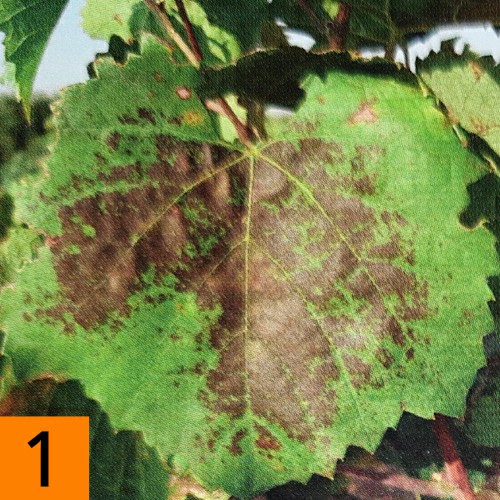
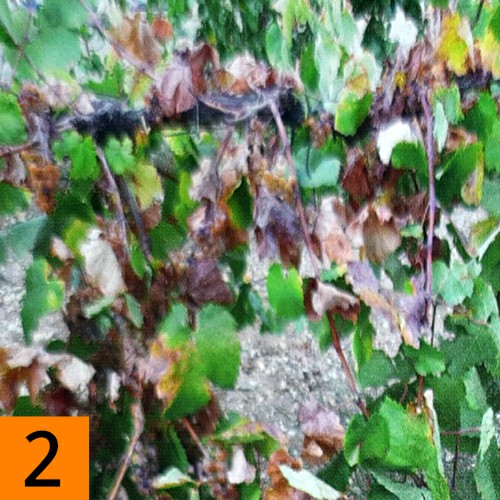

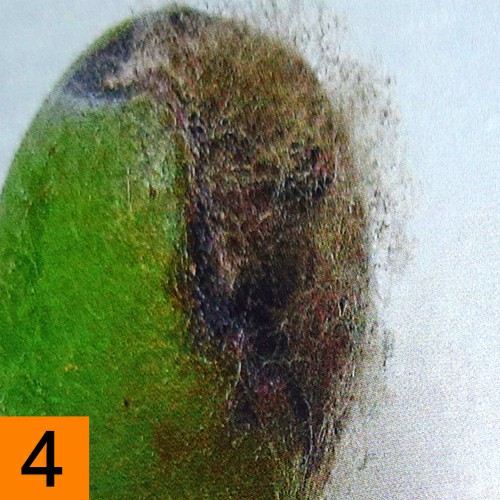
photo from the internet
DIAGNOSTICS
As alternaria develops, brown, ash-gray spots form along the veins on the upper side of the leaves (photo 1) merging, covering large areas, causing them to dry out (photo 2).
Subsequently, they darken from the coating of conidiophores with chains of dark brown conidia. On the berries, more often in places of sunburn, a sooty coating of pathogen sporulation forms (photo 3).
When leaves and berries are placed in a humid chamber, they quickly become covered with light mycelium with olive-velvety conidiophores with conidia (photo 4).
Subsequently, they darken from the coating of conidiophores with chains of dark brown conidia. On the berries, more often in places of sunburn, a sooty coating of pathogen sporulation forms (photo 3).
When leaves and berries are placed in a humid chamber, they quickly become covered with light mycelium with olive-velvety conidiophores with conidia (photo 4).
TREATMENT
Symptoms of the disease are usually clearly manifested in the second half of summer, but protective measures must be started from the beginning of the growing season of grapes.
The most effective preparations for protection against alternariosis are fungicides from the triazole group - Topaz KE, Dinali DK, etc.
These preparations are used in vineyards to protect against oidium and have a side effect on alternariosis, therefore, when they are included in the system of protective measures at the beginning of the growing season, the development of alternariosis can be reduced in the future.
The most effective preparations for protection against alternariosis are fungicides from the triazole group - Topaz KE, Dinali DK, etc.
These preparations are used in vineyards to protect against oidium and have a side effect on alternariosis, therefore, when they are included in the system of protective measures at the beginning of the growing season, the development of alternariosis can be reduced in the future.