Anthracnose
GENERAL INFORMATION
Anthracnose is caused by the pathogen - the fungus Gloeosporium ampelophagum, is a dangerous disease that affects only young tissues (non-lignified shoots, leaves - up to 20-25 days old, berries before ripening are susceptible to the disease), which leads to a decrease or death of the crop and the bush as a whole.
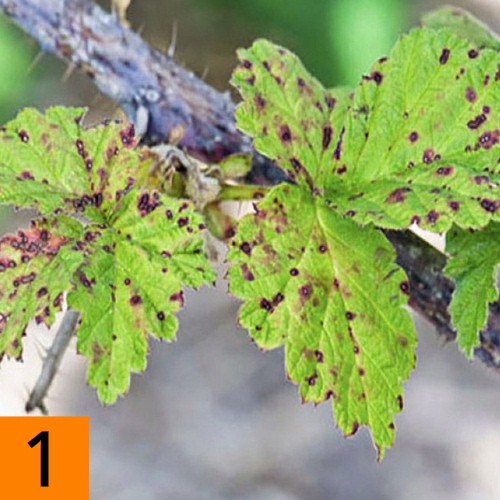


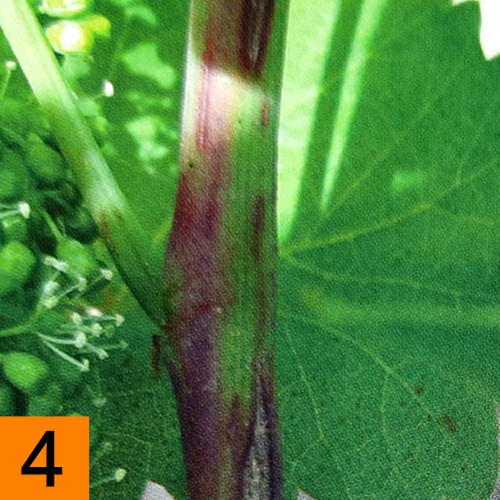
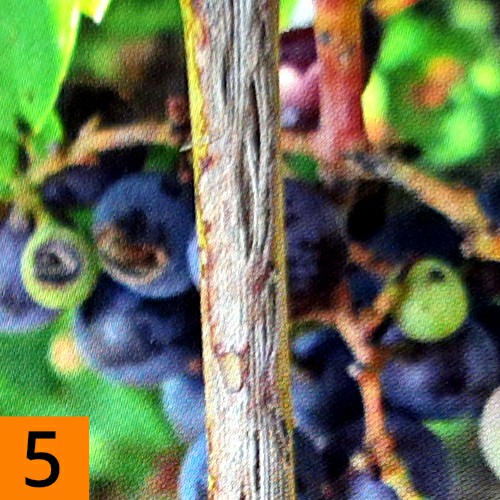
photo from the internet
DIAGNOSTICS
There are two forms of anthracnose according to symptoms: spotted and spotted. With spotted anthracnose, black dots appear on the leaves, combs, tendrils and shoots, convex in the center, which can be bordered by a brown ring. On the shoots, the dots are located in longitudinal stripes; merging, they form deep wounds in the form of fuzzy dots, which, growing, turn brown and dry out (photo 1).
Their color varies from light brown to purple, while dark brown berries are noted; this form affects slightly. With spotted anthracnose, barely noticeable light brown spots appear on the leaves (border). After some time, the spots in the center become gray (or ash) and perforate (photo 2).
The leaf blade becomes perforated. With intensive development of anthracnose, the leaves dry out prematurely and fall off (photo 3).
Symptoms of the disease on shoots: light brown oblong spots that gradually widen, deepen, darken and are bordered by a dark purple or brown rim (photo 4, 5).
Brownish, dark purple or sunken spots with a dark rim, turning gray in the center, form on the berries.
Their color varies from light brown to purple, while dark brown berries are noted; this form affects slightly. With spotted anthracnose, barely noticeable light brown spots appear on the leaves (border). After some time, the spots in the center become gray (or ash) and perforate (photo 2).
The leaf blade becomes perforated. With intensive development of anthracnose, the leaves dry out prematurely and fall off (photo 3).
Symptoms of the disease on shoots: light brown oblong spots that gradually widen, deepen, darken and are bordered by a dark purple or brown rim (photo 4, 5).
Brownish, dark purple or sunken spots with a dark rim, turning gray in the center, form on the berries.
TREATMENT
When protecting against anthracnose, it is necessary to strictly adhere to all agricultural practices on grapes that contribute to the creation of a well-ventilated crown (timely breaking off, tying up shoots, pinching).
To protect grapes from the disease, a chemical protection system is used, which includes three sprayings in the phenological phases of the grape plant development. (3-5 leaves before flowering and after flowering) with highly effective fungicides, which will allow only one additional spraying, since the next two will coincide with protection against the most dangerous disease - mildew.
When carrying out the first spraying, it is recommended to use copper-containing fungicides. In the phenological phases before flowering and after flowering, the fungicide Quadris showed high efficiency of protection.
To protect grapes from the disease, a chemical protection system is used, which includes three sprayings in the phenological phases of the grape plant development. (3-5 leaves before flowering and after flowering) with highly effective fungicides, which will allow only one additional spraying, since the next two will coincide with protection against the most dangerous disease - mildew.
When carrying out the first spraying, it is recommended to use copper-containing fungicides. In the phenological phases before flowering and after flowering, the fungicide Quadris showed high efficiency of protection.