Mold rot
GENERAL INFORMATION
Mold rots of grapes include black, green, blue and pink.
The causative agents of rots are saprophytic fungi, which under certain conditions can develop as facultative parasites, have a wide specialization and are registered on a large number of host plants.
The causative agents of rots are saprophytic fungi, which under certain conditions can develop as facultative parasites, have a wide specialization and are registered on a large number of host plants.

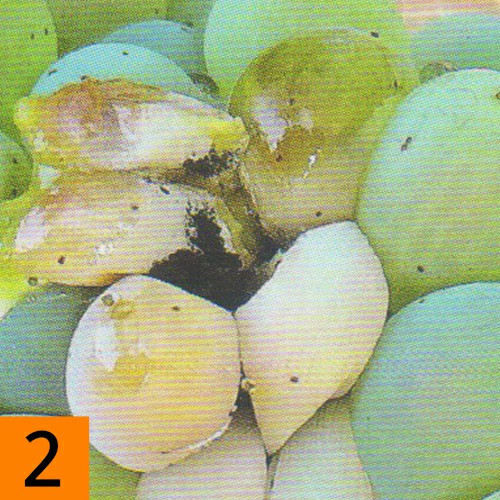

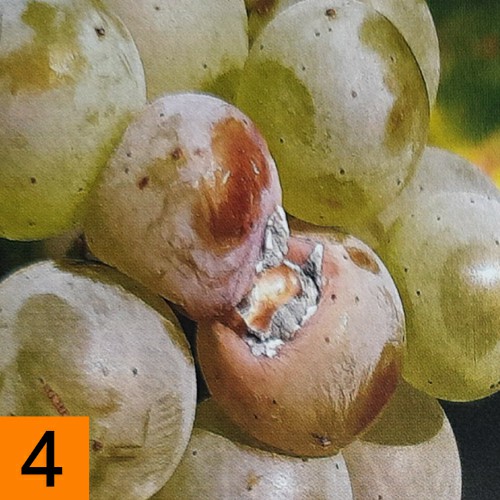
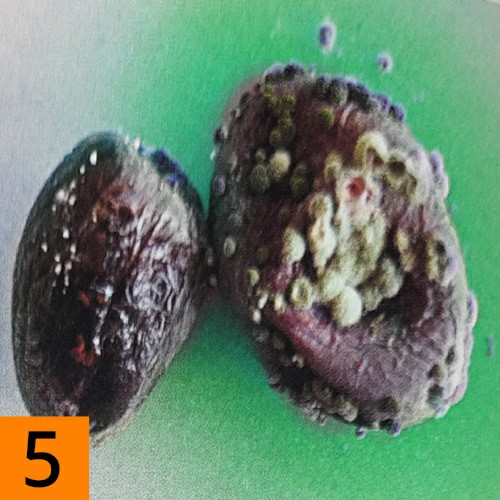
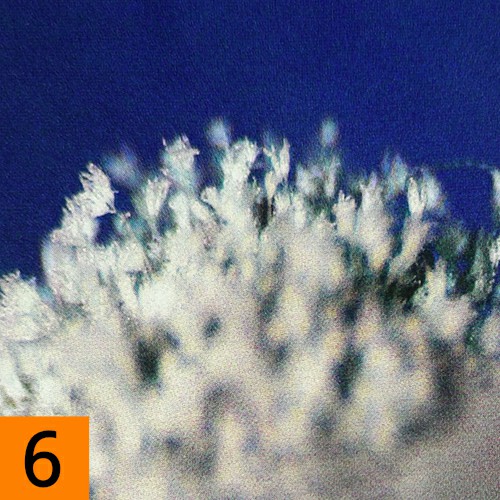
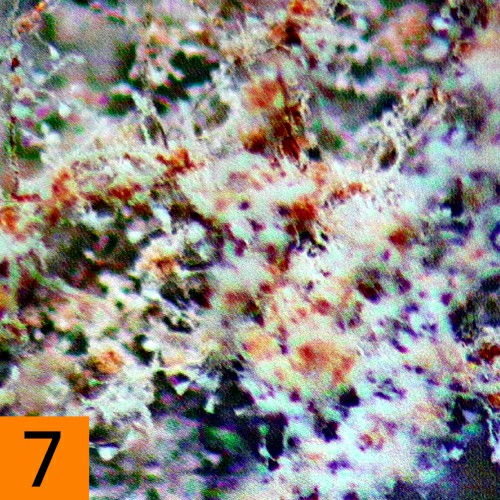
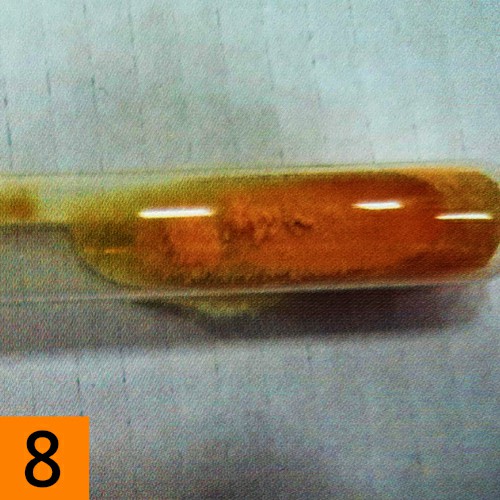
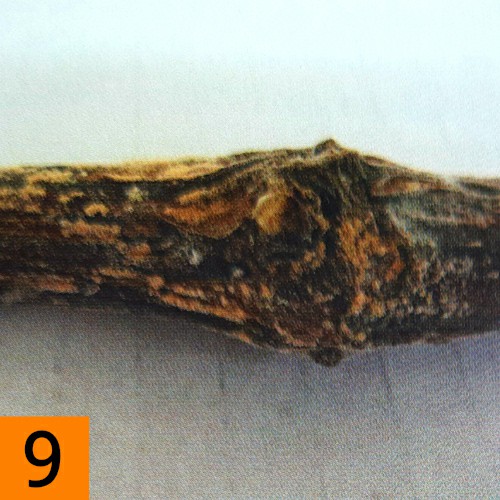
photo from the internet
DIAGNOSTICS
Aspergillosis rot The Aspergillus fungus is a thermophile and mainly affects berries in hot weather (25-30 °C), light, soft, sunken spots appear on them, later darkening (photo 1).
Later, the skin of the berries cracks and a white mycelial coating appears on their surface, on which conidial sporulation is formed in the form of a black-brown powdery mass (photo 2). When affected by Rhizopus nigricans, the berries turn brown, get wet, and become covered with a loose, initially gray, then blackening coating - the aerial mycelium of the fungus, which has the ability to spread widely (photo 3).
As a result, the berries look covered with black felt, another characteristic symptom is the release of berry juice.
The fungus develops especially quickly at a temperature of 28-32 °C, under such conditions, the period from the beginning of spore germination to the maturation of sporangia is 36 hours. Blue mold rot (synonym - penicillosis) The causative agents are fungi of the genus Panicillum. At the initial stage of the disease, a small watery light-brown spot appears, which, as it grows, becomes slightly depressed, covered with bluish-greenish pads of fungal sporulation (photo 4, 5), single conidiophores form asymmetrical brushes (photo 6).
Pink mold rot of grapes The causative agent is Trichothecium roseum Link ex Fr. When affected by the pathogen, a bursa-rotting spot usually appears at the site of attachment of the berry, which grows, first becoming covered with a thick white mycelium coating, and later, when sporulation forms, it becomes pink (photo 7, 8).
Pink colonies can also be observed on the shoots of grapes (photo 9)
As a result, the berries look covered with black felt, another characteristic symptom is the release of berry juice.
The fungus develops especially quickly at a temperature of 28-32 °C, under such conditions, the period from the beginning of spore germination to the maturation of sporangia is 36 hours. Blue mold rot (synonym - penicillosis) The causative agents are fungi of the genus Panicillum. At the initial stage of the disease, a small watery light-brown spot appears, which, as it grows, becomes slightly depressed, covered with bluish-greenish pads of fungal sporulation (photo 4, 5), single conidiophores form asymmetrical brushes (photo 6).
Pink mold rot of grapes The causative agent is Trichothecium roseum Link ex Fr. When affected by the pathogen, a bursa-rotting spot usually appears at the site of attachment of the berry, which grows, first becoming covered with a thick white mycelium coating, and later, when sporulation forms, it becomes pink (photo 7, 8).
Pink colonies can also be observed on the shoots of grapes (photo 9)
TREATMENT
Since mold rot pathogens are wound pathogens, protective measures should be aimed at protecting berries from insect damage, which can be achieved with timely use of insecticides:
Switch, Horus. Treatment of grapes with fungicides to protect against the main diseases of mildew, oidium, gray mold - reduces the degree of mold development.
Agrotechnical measures are of no small importance:
Destruction of plant residues.
Carrying out green operations aimed at improving the ventilation of grape bunches.
Switch, Horus. Treatment of grapes with fungicides to protect against the main diseases of mildew, oidium, gray mold - reduces the degree of mold development.
Agrotechnical measures are of no small importance:
Destruction of plant residues.
Carrying out green operations aimed at improving the ventilation of grape bunches.