Bacterial Canker
GENERAL INFORMATION
The causative agent of bacterial canker is the bacterium Agrobacterum vitis
(tumefaciens) Smis. et Towns.
It is a polyphagous pathogen and can infect more than two hundred species of dicotyledonous plants, including ornamental, vegetable, fruit, and grape crops.
The pathogen causes root canker in fruit crops.
It is a polyphagous pathogen and can infect more than two hundred species of dicotyledonous plants, including ornamental, vegetable, fruit, and grape crops.
The pathogen causes root canker in fruit crops.


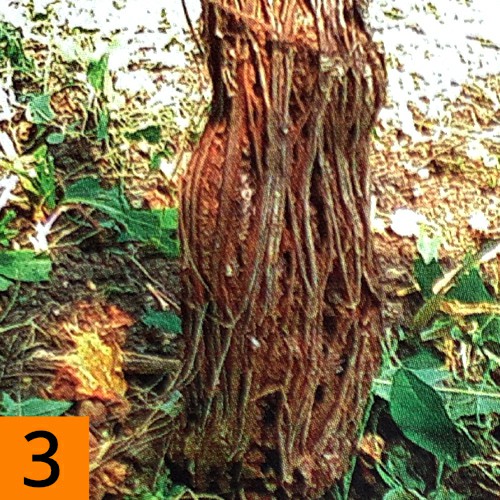
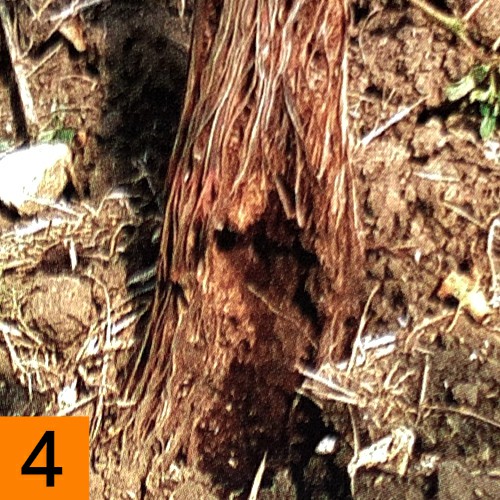
photo from the internet
DIAGNOSIS
Bacterial canker primarily affects
the aboveground
woody parts of the vine
(often closer to the soil level).
Bacterial canker on the roots is atypical, but the bacterium can cause localized necrosis on them. By stimulating the accumulation of growth substances, the disease causes excessive tissue proliferation, leading to the formation of growths (photos 1, 2).
Initially, soft, pale pink or white tumors up to 20 cm in diameter form at the sites of bacterial entry, which then darken and harden. Over time, they grow, become hard, and rupture the bark (photo 3), eventually drying out by the end of summer.
The surface of the tumors is uneven and lumpy. During autumn and winter, old tumors die off and fall away (photo 4), releasing the infection into the soil, where it persists for many years. In spring, new tumors form in their place or nearby.
Bacterial canker on the roots is atypical, but the bacterium can cause localized necrosis on them. By stimulating the accumulation of growth substances, the disease causes excessive tissue proliferation, leading to the formation of growths (photos 1, 2).
Initially, soft, pale pink or white tumors up to 20 cm in diameter form at the sites of bacterial entry, which then darken and harden. Over time, they grow, become hard, and rupture the bark (photo 3), eventually drying out by the end of summer.
The surface of the tumors is uneven and lumpy. During autumn and winter, old tumors die off and fall away (photo 4), releasing the infection into the soil, where it persists for many years. In spring, new tumors form in their place or nearby.
TREATMENT
There are no effective chemical treatments for bacterial canker. Bactericides kill the bacteria on external surfaces but do not eliminate the bacteria that survive systemically within the vine.
Infected vines should be uprooted; dig up and remove as many roots of the diseased plant as possible from the vineyard.
Therefore, the main methods of managing bacterial canker in vineyards are prevention and control:
Avoid accidental injuries to the vines.
Maintain the vineyard in optimal condition by providing adequate irrigation and mineral nutrition.
Regularly disinfect grafting tools.
Infected vines should be uprooted; dig up and remove as many roots of the diseased plant as possible from the vineyard.
Therefore, the main methods of managing bacterial canker in vineyards are prevention and control:
Avoid accidental injuries to the vines.
Maintain the vineyard in optimal condition by providing adequate irrigation and mineral nutrition.
Regularly disinfect grafting tools.