Esca
GENERAL INFORMATION
Esca is one of the most harmful diseases of perennial wood, as it causes pathological damage to the wood of perennial parts of bushes. Esca is a distorted Greek word (iska), which means a tinder fungus that destroys wood.
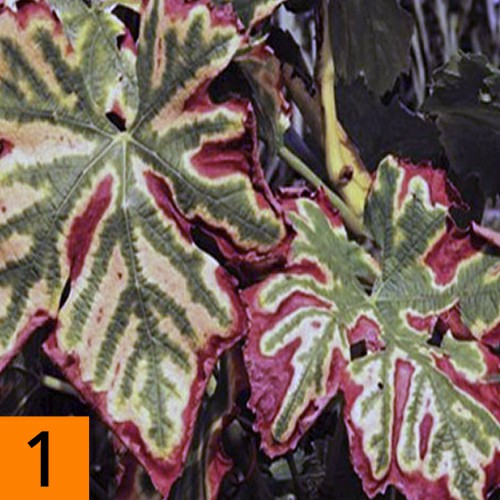

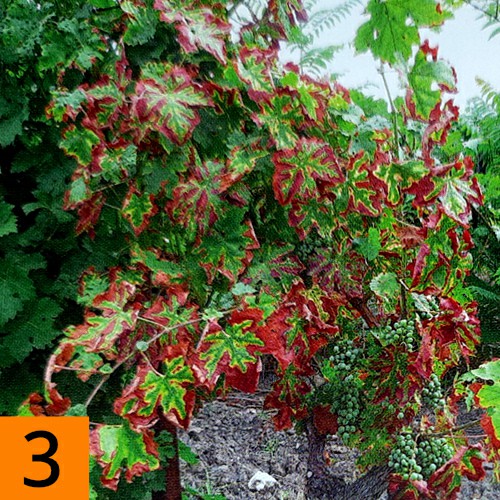

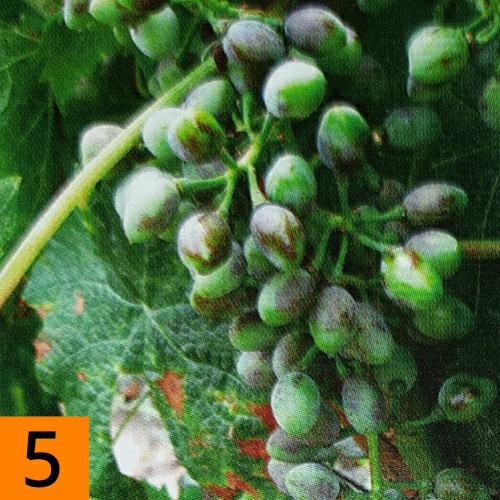
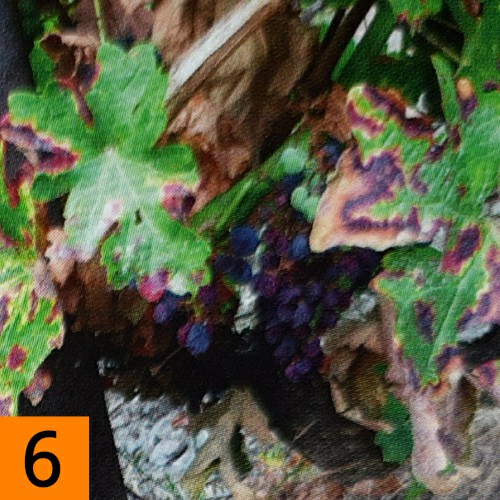
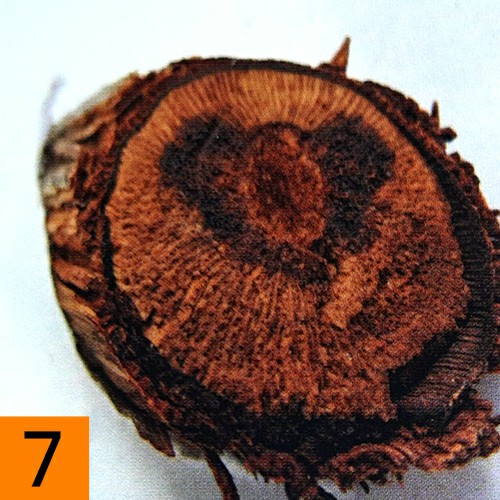
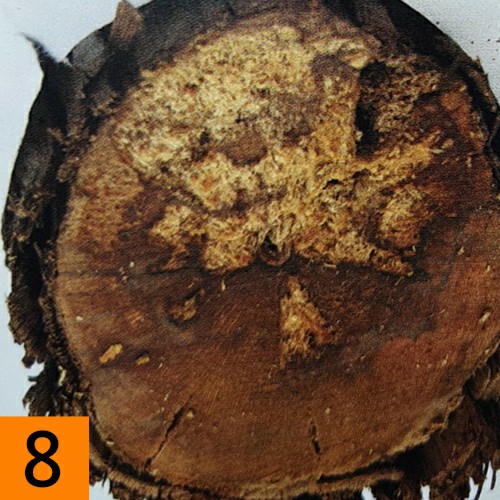
photo from the internet
DIAGNOSTICS
Symptoms of the disease can appear on individual parts of perennial wood or the whole grape bush.
Two forms of disease manifestation are noted on affected plants:
The first is like apoplexy (sudden wilting) - rapid, often unexpected death of the plant, when outwardly healthy bushes suddenly wither, leaves lose turgor shine and become dirty green or gray, the color of the berries changes in different ways: from dirty green in white-berry varieties to brick-red in dark-berry varieties, subsequently they wrinkle.
The second is a chronic form, which is expressed in the slow drying of individual parts of the plants. The disease begins to appear visually on the lower leaves, and then spreads along the entire shoot. Affected bushes differ sharply from healthy ones in their bright red (in dark-berry varieties) or yellow (in light-berry varieties) color of the leaves, as well as severe necrosis of the leaf tissue between the main veins (photos 1-4).
The symptoms on the berries may vary, they either do not reach maturity or are covered with brownish-purple spots and often crack and dry out (photo 5, 6).
The leaves on the affected bushes prematurely acquire autumn coloring, then gradually dry out, starting from the edges. The border of the leaf damage gradually approaches the veins. One of the branches of the grape plant may dry out completely, while the second part of the bush may develop normally. Deep dark necrotic spots are visible on the cross sections of perennial wood of grape plants that died from Eski, the zone of damaged loose wood is light in color with a dark brown border (photo 7, 8).
Two forms of disease manifestation are noted on affected plants:
The first is like apoplexy (sudden wilting) - rapid, often unexpected death of the plant, when outwardly healthy bushes suddenly wither, leaves lose turgor shine and become dirty green or gray, the color of the berries changes in different ways: from dirty green in white-berry varieties to brick-red in dark-berry varieties, subsequently they wrinkle.
The second is a chronic form, which is expressed in the slow drying of individual parts of the plants. The disease begins to appear visually on the lower leaves, and then spreads along the entire shoot. Affected bushes differ sharply from healthy ones in their bright red (in dark-berry varieties) or yellow (in light-berry varieties) color of the leaves, as well as severe necrosis of the leaf tissue between the main veins (photos 1-4).
The symptoms on the berries may vary, they either do not reach maturity or are covered with brownish-purple spots and often crack and dry out (photo 5, 6).
The leaves on the affected bushes prematurely acquire autumn coloring, then gradually dry out, starting from the edges. The border of the leaf damage gradually approaches the veins. One of the branches of the grape plant may dry out completely, while the second part of the bush may develop normally. Deep dark necrotic spots are visible on the cross sections of perennial wood of grape plants that died from Eski, the zone of damaged loose wood is light in color with a dark brown border (photo 7, 8).
TREATMENT
To reduce the infectious load on grape plantations, it is necessary to carry out preventive measures. When pruning, avoid wounds on the trunk and at the base of the branches, the cuts should be located above the branches.
Such pruning ensures almost continuous sap flow along the entire diameter of the trunk and most of the branches bearing fruit-bearing shoots.
Avoid damaging the trunks during mechanized soil cultivation.
It is advisable to disinfect large wounds with special putties.
The pruner must be regularly wiped with alcohol or another disinfectant solution. Infected bushes should be pruned as late as possible, with the onset of sap flow; when pruning in winter, it is not recommended to carry out this technological operation during rains, the pruned vine should be taken outside the site and burned. Grape bushes pruned in winter are several times more likely to become infected with zska than those pruned during the early growth period. Damaged bushes can be replanted from suckers and water shoots, removing all infected wood.
In the vineyard, it is necessary to mark affected plants in the summer and fall.
Completely diseased bushes should be removed from the vineyard and burned.
New vine plantings should be established only with healthy planting material.
Such pruning ensures almost continuous sap flow along the entire diameter of the trunk and most of the branches bearing fruit-bearing shoots.
Avoid damaging the trunks during mechanized soil cultivation.
It is advisable to disinfect large wounds with special putties.
The pruner must be regularly wiped with alcohol or another disinfectant solution. Infected bushes should be pruned as late as possible, with the onset of sap flow; when pruning in winter, it is not recommended to carry out this technological operation during rains, the pruned vine should be taken outside the site and burned. Grape bushes pruned in winter are several times more likely to become infected with zska than those pruned during the early growth period. Damaged bushes can be replanted from suckers and water shoots, removing all infected wood.
In the vineyard, it is necessary to mark affected plants in the summer and fall.
Completely diseased bushes should be removed from the vineyard and burned.
New vine plantings should be established only with healthy planting material.