Mildew
GENERAL INFO
Mildew grows really well in humid climates and European grape varieties are the most susceptible.
The cause is a fungus called Viticola berl. et. de Toni which is a parasite that only grows on vines, you know, like a plant that has to live off of another plant.
The cause is a fungus called Viticola berl. et. de Toni which is a parasite that only grows on vines, you know, like a plant that has to live off of another plant.
photos from the Internet
DIAGNOSTICS
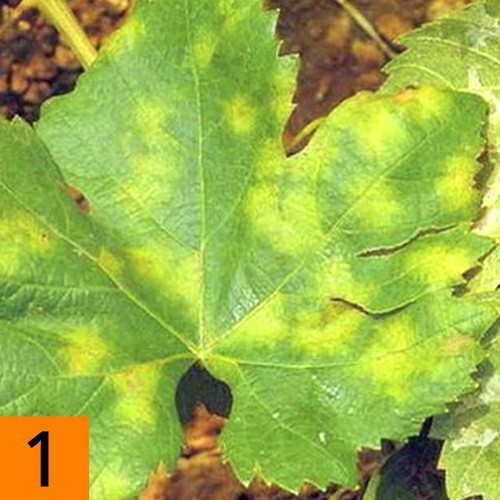
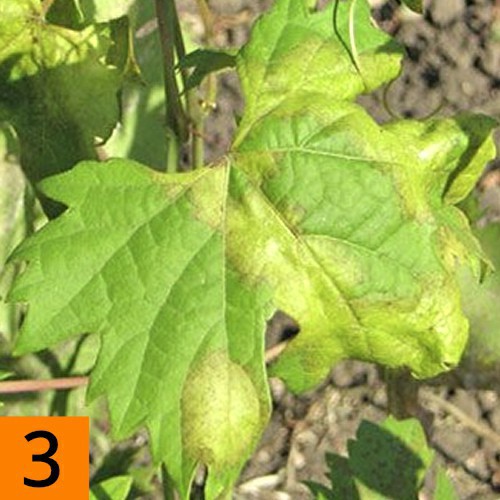
Mildew can develop on all green parts of the vine, including leaves, shoots, flowers, berries, and tendrils. The first sign of mildew is visible on the leaves in the form of oily spots on the upper surface of the leaf (see photo 1).
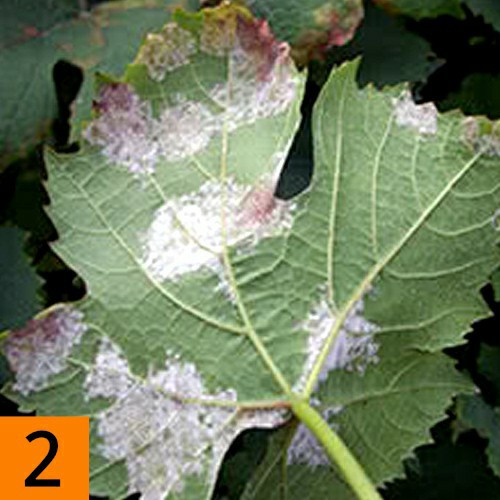
Under favorable conditions, these spots can merge and the entire leaf may turn yellow on the upper side, while the underside becomes covered with a layer of fungal spores (see photo 2).
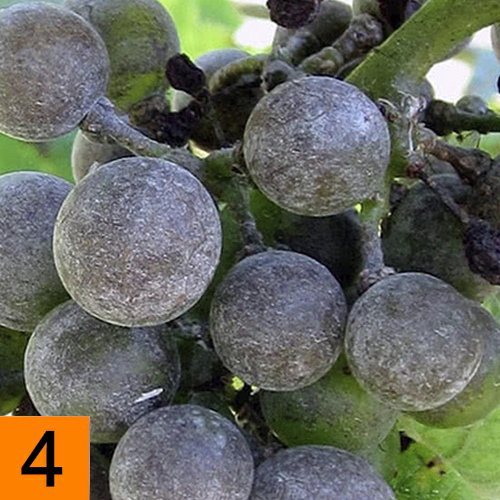
If the damage is severe, the affected leaves may fall off. On buds, flowers, and young berries, mildew appears as a powdery coating (see photo 4).
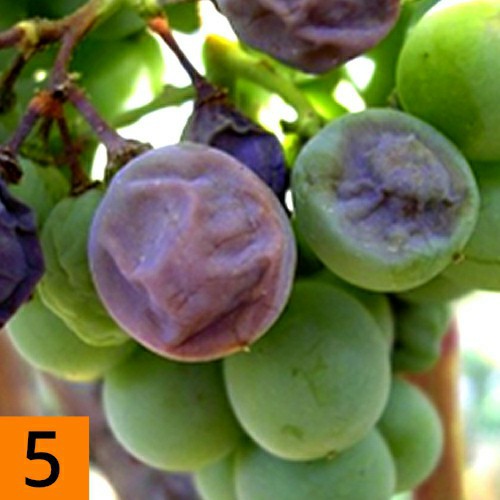
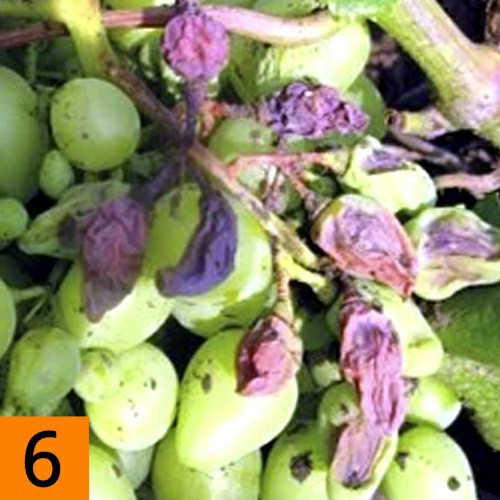
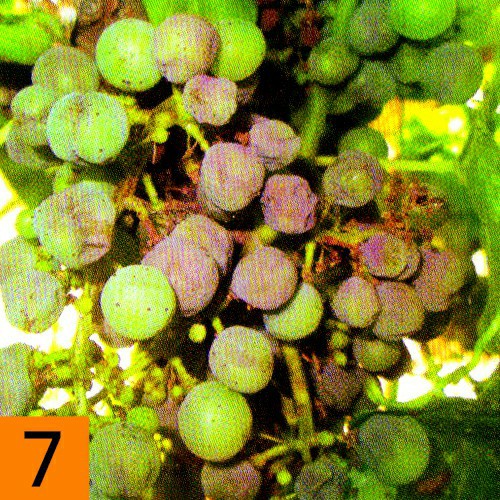
As the infection progresses, the affected parts may turn brown and dry up (see photos 5 and 6).
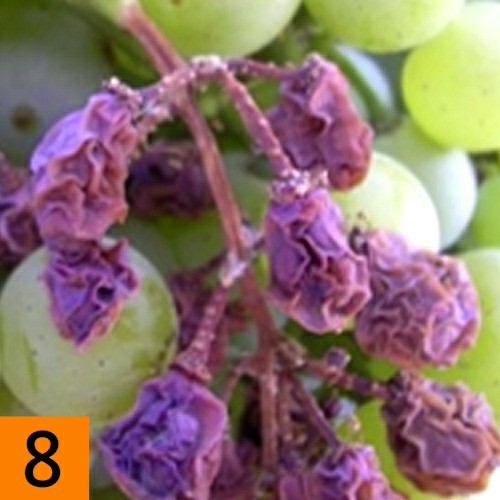
In larger berries, the powdery spores no longer protrude from the surface, but instead acquire a purplish color and shrink, eventually falling off (see photo 8).
Under favorable conditions, these spots can merge and the entire leaf may turn yellow on the upper side, while the underside becomes covered with a layer of fungal spores (see photo 2).
If the damage is severe, the affected leaves may fall off. On buds, flowers, and young berries, mildew appears as a powdery coating (see photo 4).
As the infection progresses, the affected parts may turn brown and dry up (see photos 5 and 6).
In larger berries, the powdery spores no longer protrude from the surface, but instead acquire a purplish color and shrink, eventually falling off (see photo 8).
TREATMENT
For maximum protection of grapes, it is essential to ensure that the entire plant, including shoots, leaves, and berries, is covered with a protective preparation.
When using systemic fungicides, it is crucial to strictly adhere to the recommended protective period!
Some of the most effective options include Ridomil Gold, Quadris, and Pergado.
Effective protection against mildew can only be achieved through a combination of both agrotechnical measures and chemical treatments, as well as the cultivation of resistant grape varieties.
When using systemic fungicides, it is crucial to strictly adhere to the recommended protective period!
Some of the most effective options include Ridomil Gold, Quadris, and Pergado.
Effective protection against mildew can only be achieved through a combination of both agrotechnical measures and chemical treatments, as well as the cultivation of resistant grape varieties.